Rethinking Flow Efficiency: Optimizing the Corporate Account Opening Process in Southeast Asian Banks
In Southeast Asia’s competitive banking sector, one operational pain point remains stubbornly slow: the corporate account opening process. Despite widespread digitization efforts, onboarding timelines still range from 15 to 30 business days, often longer for foreign-owned companies.
This is far from the 3–5 business day turnaround now expected by many customers
Rethinking Flow Efficiency: Optimizing the Corporate Account Opening Process in Southeast Asian Banks
1. Executive Summary
In an era where digital expectations continue to rise and customer patience is wearing thin, banks across Southeast Asia are under pressure to modernize their legacy operations and deliver faster, more seamless services.
One area where inefficiency remains persistent is the corporate account opening process. Despite significant investment in digital platforms, the average turnaround time for corporate account onboarding remains lengthy, ranging from 15 to 30 business days across major banking markets, including Indonesia, Malaysia, Vietnam, and Thailand.
In more complex or foreign-owned cases, durations can extend beyond 30 working days, especially when external compliance checks and manual documentation intersect (Emerhub, 2024; Tetra Consultants, 2023).
This article explores the underlying structural inefficiencies that prolong this critical business function. Drawing from practical consulting engagements and firsthand observations in the field, we propose a pragmatic strategy to streamline and optimize onboarding workflows.
Senior leaders in banking can benefit not just from cycle time reduction but also from improved collaboration, risk visibility, and customer experience.
2. The Challenge: Diagnosing the Bottlenecks in Corporate Onboarding
While banks have digitized customer-facing touchpoints, internal coordination remains highly siloed and sequential. Corporate account onboarding typically involves multiple stakeholders, including front-office sales, compliance, risk assessment, operations, IT token provisioning, and, at times, legal counsel.
This complexity creates invisible queues and unmanaged work-in-progress (WIP).
Based on our regional review, typical bottlenecks include:
Workflow Stage
Common Bottlenecks
Average Duration (SEA Region)
Document Submission & Validation
Rework due to incomplete/inaccurate documents
3–7 business days (Indonesia, Vietnam)
Compliance & Risk Review
Serial processing; low visibility into dependencies
5–10 business days (Singapore, Thailand)
Internal Sign-offs
Physical signatories and paper-based authorizations
“Even in digitally mature markets like Singapore, we observed onboarding durations averaging 14–20 business days, largely due to compliance and risk checks”
3. Systems Thinking Remedies: Applying Flow Optimization
To shift from task management to value delivery, Southeast Asian banks can apply principles of flow-based systems observed in leading consulting practices.
These principles center on defining clear workflows, actively managing work-in-progress, and continuously improving based on performance data.
a. Visualize the End-to-End Process
Most banks operate with fragmented visibility—each department tracks its own work, but no one has a comprehensive view of the whole.
A shared workflow board that visualizes all stages of the onboarding pipeline allows stakeholders to:
Identify handoff delays and blocked items
Monitor actual WIP across teams
Predict bottlenecks using cumulative flow analysis
b. Actively Manage Work-In-Progress (WIP)
Uncontrolled WIP is one of the main culprits of delay. Applying WIP limits to each step in the onboarding process forces prioritization and reduces context switching, thereby enhancing productivity.
This practice aligns with Little’s Law, which states:
Cycle Time = WIP / Throughput
By reducing WIP, banks naturally shorten cycle times. Teams can use real-time indicators, such as Work Item Age, to detect aging cases and intervene proactively before rework or customer dissatisfaction occurs.
c. Use Service Level Expectations (SLEs) to Set Predictable Delivery
Instead of vague SLAs, align expectations with what customers now voice online: “I expect my corporate account to be up and running in 3 to 5 business days.” Or in a more definitive SLE lingo, “87% of new corporate accounts will be onboarded within 5 days or less!“.
These expectations:
Reflect real user sentiments and benchmarks
Enable risk-based prioritization
Shift team behavior toward flow predictability rather than deadline compliance
d. Implement Swarming and Unblocking Routines
When high-value clients are stuck in the middle of the pipeline, cross-functional teams should swarm around the blockers. This may involve:
Real-time escalation to compliance/risk
Pairing operations and IT to resolve token setup delays
Creating policies that define how long items can remain blocked before action is triggered
“Cross-functional swarming in bottleneck stages led to a 25–30% reduction in end-to-end onboarding time in regional banks.”
McKinsey (2021)
e. Right-Size and Prioritize Work Items
Large onboarding packages often contain elements that can be processed independently of one another. For instance:
Approve business registration and tax details in parallel
Process board resolution after KYC verification
Breaking work into smaller deliverables prevents delays due to dependency on a single missing document.
4. What’s Next: Building Sustainable Flow Capability
For banks seeking to scale this optimization across business units or regional offices, we recommend the following:
1. Establish Flow Governance: Create a cross-functional task force that monitors flow metrics, identifies recurring blockers, and adjusts policies based on data.
2. Scale Visual Flow Management to Portfolio Level: Use a portfolio-level board to prioritize key accounts, forecast onboarding capacity, and align work distribution across teams.
3. Extend Flow to Third Parties: Bring legal consultants, external KYC vendors, and courier services into the visual workflow to track handoffs and aging across organizational boundaries.
4. Institutionalize Flow Reviews: Replace weekly status meetings with Flow Reviews. Focus on:
Oldest aging items
WIP trends
Missed SLEs
Root causes for delays
“Organizations that conducted weekly flow reviews saw a 15–20% improvement in throughput within two quarters”
(BCG Agile in Banking, 2022)
5. Train Leaders in Flow Metrics. Executives should be fluent in reading cumulative flow diagrams, interpreting WIP trends, and using service expectations to make funding and staffing decisions.
5. Conclusion: From Process Thinking to Flow Thinking
Corporate onboarding is not just a compliance procedure—it’s a strategic touchpoint. A slow onboarding process risks losing high-value clients and diminishes trust in digital promises.
Across Southeast Asia, banks that adopt a systems thinking approach to optimize their processes are achieving measurable gains, including faster onboarding, improved compliance alignment, and enhanced customer satisfaction.
But this journey does not require a technology overhaul. With small, well-guided interventions rooted in real-world consulting practices, banks can transform onboarding from a reactive process into a streamlined value stream.
At Teal Agility, we help banks adopt modern flow practices grounded in real-world consulting experience. Our approach combines systems thinking, visual work management, and agile governance to ensure sustainable transformation.
For banks ready to move beyond process maps and into dynamic performance systems, the opportunity is clear: Rethink the flow. Accelerate value.
This guide discusses Augmented Work, where technology assists knowledge work while a human retains control and accountability.
It emphasizes the importance of human judgment in making decisions about task delegation, verifying outputs, governing returns, and directing organizational dividends.
Practitioners must balance capability, accountability, and the return on augmented work to optimize value.
The guide provides a framework for individuals and organizations to navigate the evolving work landscape amid advancing technology, encouraging proactive decision-making and continuous skill practice to maintain professional integrity and responsibility.
The article discusses the necessity of treating portfolio and program levels as products within agile organizations, emphasizing this approach’s significance for governance and decision-making.
It highlights various scaling frameworks like SAFe and LeSS, exploring the need for a Lean PMO that supports value-driven decision-making while avoiding project-centric pitfalls.
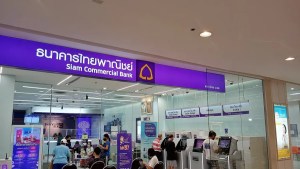
Siam Commercial Bank is undergoing a transformation combining coaching, agility, and AI strategy. Key initiatives include fostering a learning culture, optimizing workflows, and modernizing data infrastructure. SCB aims for 75% of revenue to be AI-enabled by 2028 and full AI literacy by 2025, emphasizing the importance of coaching and flow in achieving sustained impact.
AEON Vietnam’s transformation initiative from 2021 to 2023 focused on creating a coaching culture, improving teamwork, and enhancing leadership innovation. Key results included coaching for over 3,500 employees, increased team performance scores, higher retention rates, and decreased promotion costs. The approach emphasized transparency, experimentation, and alignment with financial metrics for sustainable growth.